Now that the semester is finally at its end, I can finally turn my attentions to my own personal projects that I've been meaning to work on. Among these is my continued pursuit of open courseware developments. This past semester I had the pleasure of tinkering with the Massachusetts Institute of Technology's MITx open learning platform. MITx piloted its revolutionary system through its Circuits and Electronics class. The class itself isn't for the faint of heart. It is taught by Professor Anant Agarwal, who is the director of MIT's Computer Science and Artificial Intelligence Laboratory (CSAIL), and much of the content was way over my head at this time. But I wasn't taking the class to necessarily learn about EE. Rather I wanted to have the opportunity to delve into the inner workings of MITx.
The system is elegant in a way that only MIT can deliver. The courseware itself is laid out so that things are easy to find. The lectures are made available via embedded Youtube videos and those videos are transcripted such that you can click on a section of the transcript and actually jump to that section in the video on the fly. This is a useful feature because it makes it much easier to backtrack through a lecture to find some nugget of information that the student might have missed or needs to review further. Finally, labs, assignments, and quizzes are embedded directly into the UI which gives that truly structured and linear feel a classroom should have. I'm currently studying for my certification in Health IT Process Workflow and Redesign and one of the most frustrating things about the classes isn't the content, but the tragedy that is Sakai's poorly designed UI.
There is a great deal more I could say that is positive about MITx, but I have one fundamental criticism. The lab spaces are clunky which is unusual since the sandbox feature is so elegant. I think MITx should implement a trashcan feature to delete components off the lab space, and also make it so that when you click on the lab space, the lab space takes the focus and the mouse then dwells in the lab space. As it stands, the mouse can roam freely around the page which may seem inconsequential, but it gets annoying from time to time. All the same, the ability to sandbox circuit diagrams proves invaluable as students complete coursework.
And it is on this note of improvements to MITx that I turn to the latest and most exciting announcement. I've said that 2012 shall be The Year of Open Courseware, and the world of academia seems to agree. With the advent of MITx, MIT's number one rival school has joined the initiative. Harvard University isn't particularly well known for it's ocw framework, but it does over a few courses under its open courseware platform. Harvard has sought to take its initiative a step further by teaming up with MITx to form a revoluttionary joint partnership known as edX. edX will offer both Harvard and MITx courses. It will use the MITx platform, and invites any and all institutions to pick up the platform and use it to supplement that institution's courses. Below I've embedded the press conference that was held recently. Check it out. These are exciting times we are living in.
Video streaming by Ustream
Showing posts with label 2012. Show all posts
Tuesday, May 8, 2012
Tuesday, January 3, 2012
End of the World or World Without End???
As we begin this new year, a number of questions stir in people's minds. Most are relatively benign: What does the year hold in store for me? How can I make this year different from the last? And on, and on.
But this year is already different, isn't it? This year is special. This year has been the subject of speculation for time beyond mind. 2012 has been called the year that marks the end of the world, but it has also been called the year that marks the end of the age. So which is it? Without calling bias into the nature of this article, I would like to attempt to outline some of the eschatological theories associated with the end of the Long Count Calendar.
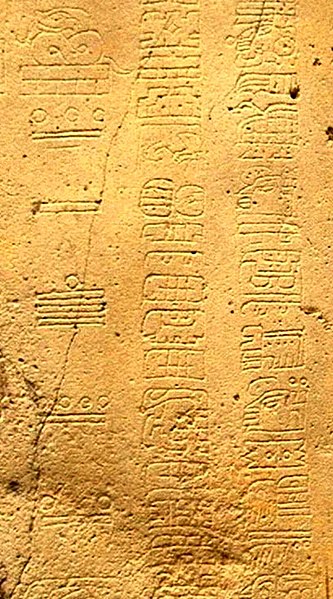
The Mesoamerican Long Count Calendar is a 5,125 year long calendar of unknown origin. Most scholars agree that the calendar is originally Olmec in design; however, a similar calendar was discovered in Egypt that predates the Olmecs settling Mesoamerica by about 650 years. Interestingly enough, both calendars are celestial in design and both calendars terminate in 2012. Both calendars consist of 360 day years, and both calendars are linear in design.This is counter to the popular depiction of a circular 365 day calendar that Mayanists portray, and assists in supporting the argument that the calendar does indeed have a finite termination date.
But what happens when this date is reached? Maybe nothing, and most experts would support this. Yet there is a disturbing commonality among ancient civilizations that used the stars to keep track of time; all of these calendars seem to terminate this year, and appear to be marked by some cataclysmic event that brings about the end of the world as we know it. I could stop there, but then I would fall into the trap that sensationalizes the whole concept of a 2012 Apocalypse. There is a key piece that many supporters of the 2012 phenomenon seem to omit, and that is the concept that as one world ends, a new world begins. As a matter of fact, according to the mythologies of many Native American tribes, there were three worlds prior to the one we live in now. If these legends are correct, then 2012 marks the end of the fourth world, and the beginning of the fifth. How this is brought about is anybody's guess, but many believe that this year shall be marked by a time of increased solar activity that triggers a series of natural disasters. Others speculate that an asteroid or comet will strike the Earth causing widespread damage. Perhaps most bizarre, is that some theorists speculate that the Earth will collide with an ancient celestial object (some identify this object as a planet) known as Nibiru. This is all theory, with very little evidence to back the claims. Of the two theories, the first seems slightly more realistic, as the sun is expected to reach a period of high solar activity sometime this year. Yet, civilizations far older than our own and spanning the entire world indicate 2012 with some exactitude. Here are just a few examples of what these civilizations have hailed 2012 as:
With so many similarities between predictions, it is possible that all of these cultures are correct to some degree. It is equally possible that none of these cultures are correct and 2012 will come and go just like any other year. There will be war, and pain, and destruction. But there will also be tenderness, hope, and perhaps even a little bit of joy. If these year is to mark our uprooting, then so be it, but let it not unhinge us. Let it not deliver us into the arms of despair. Let it instead unite us, and bring us closer to realizing what this world has seemed to have lost in the midst of all the uncertainty; its humanity. Happy New Year everybody. May it bring you blessings and prosperity beyond your wildest dreams.
But this year is already different, isn't it? This year is special. This year has been the subject of speculation for time beyond mind. 2012 has been called the year that marks the end of the world, but it has also been called the year that marks the end of the age. So which is it? Without calling bias into the nature of this article, I would like to attempt to outline some of the eschatological theories associated with the end of the Long Count Calendar.
The Mesoamerican Long Count Calendar is a 5,125 year long calendar of unknown origin. Most scholars agree that the calendar is originally Olmec in design; however, a similar calendar was discovered in Egypt that predates the Olmecs settling Mesoamerica by about 650 years. Interestingly enough, both calendars are celestial in design and both calendars terminate in 2012. Both calendars consist of 360 day years, and both calendars are linear in design.This is counter to the popular depiction of a circular 365 day calendar that Mayanists portray, and assists in supporting the argument that the calendar does indeed have a finite termination date.
But what happens when this date is reached? Maybe nothing, and most experts would support this. Yet there is a disturbing commonality among ancient civilizations that used the stars to keep track of time; all of these calendars seem to terminate this year, and appear to be marked by some cataclysmic event that brings about the end of the world as we know it. I could stop there, but then I would fall into the trap that sensationalizes the whole concept of a 2012 Apocalypse. There is a key piece that many supporters of the 2012 phenomenon seem to omit, and that is the concept that as one world ends, a new world begins. As a matter of fact, according to the mythologies of many Native American tribes, there were three worlds prior to the one we live in now. If these legends are correct, then 2012 marks the end of the fourth world, and the beginning of the fifth. How this is brought about is anybody's guess, but many believe that this year shall be marked by a time of increased solar activity that triggers a series of natural disasters. Others speculate that an asteroid or comet will strike the Earth causing widespread damage. Perhaps most bizarre, is that some theorists speculate that the Earth will collide with an ancient celestial object (some identify this object as a planet) known as Nibiru. This is all theory, with very little evidence to back the claims. Of the two theories, the first seems slightly more realistic, as the sun is expected to reach a period of high solar activity sometime this year. Yet, civilizations far older than our own and spanning the entire world indicate 2012 with some exactitude. Here are just a few examples of what these civilizations have hailed 2012 as:
- Hopi-25year period of purification, followed by End of Fourth World and beginning of the Fifth.
- Mayan-The end of Days
- Maori-Merging of the spiritual and physical worlds
- Zulu-The entire world will be flipped upside down
- Hindu-The end of time of man, and the coming of the "Enlightened Ones"
- Inca-The age of meeting ourselves again
- Aztec-A new race is born
- Pueblo-Emergence into the Fifth World
- Tibetan-The coming of the "Golden Age"
With so many similarities between predictions, it is possible that all of these cultures are correct to some degree. It is equally possible that none of these cultures are correct and 2012 will come and go just like any other year. There will be war, and pain, and destruction. But there will also be tenderness, hope, and perhaps even a little bit of joy. If these year is to mark our uprooting, then so be it, but let it not unhinge us. Let it not deliver us into the arms of despair. Let it instead unite us, and bring us closer to realizing what this world has seemed to have lost in the midst of all the uncertainty; its humanity. Happy New Year everybody. May it bring you blessings and prosperity beyond your wildest dreams.
Labels:
2012,
apocalypse,
aztec,
end of the world,
inca,
long calendar,
maya,
mesoamerica,
new year,
nibiru,
olmec,
prophecy
Monday, December 26, 2011
2012- The Year of Open Courseware
As we near the end of 2011, I reflect on the fact that many high school students will soon be embarking on their journey to college. They have painstakingly worked their way through twelve years of public school for the sole purpose of receiving a piece of paper that demonstrates that they can successfully regurgitate "facts" to their school district's satisfaction. From there, many of them will choose to pursue a four year degree, and perhaps even graduate school after. Others may choose to crawl their way up from the bottom rung of the societal ladder, working minimum wage jobs until their department overseer decides that he or she has proven him or herself worthy enough to join the ranks of the corporate elite. Still others may rise above the system, and redefine it by their own terms, perpetuating their name into immortality. There are those that may embark on a path of self destruction, and those who may embark on a path of self sacrifice. Regardless of the instrument of one's path through life, one truth remains abundantly clear; scientia est potentia.
Confused? Don't be. The phrase above is a Latin phrase that simply means "knowledge is power". It is something that those that I've looked up to have always emphasized. But it begs to question: Just what is the cost of the pursuit of knowledge? The world of academia would have you pay thousands of dollars, and plunge yourself into debt and despair in the name of the pursuit of knowledge; however, we all know that knowledge and the pursuit thereof is, and always has been, free to those who seek it. Thanks to the advent of the social network, learning can be achieved in ways that our parents and grandparents could only begin to imagine.
Enter the world of the Open Courseware Consortium, a massive conglomeration of educational institutions with a single goal in mind, feeding the pursuit of knowledge free of charge. Thanks to OCWC there are now entire degree programs available from some of the most prestigious universities in the world to audit free of charge. The following is a sample list of courses that the Massachusetts Institute of Technology offers through OCWC:
I chose MIT because of their prestige, but also because of the fact they have helped to spearhead this new era of open courseware. The Internet has exploded with open courseware resources, and now MIT has chosen to take this to the next logical level with its announcement of MITx which will allow users to earn certificates opposed to just auditing courses. You can read more about MITx HERE
In addition to the institutional movement towards open courseware, there is also a massive social movement towards the open learning environment. A prime example of this is "Khan Academy", a website whose video library boasts more than 2,700 videos covering a broad variety of subjects that you can watch completely for free. Moreover, Khan Academy offers practice exercises, and even awards badges and achievements to registered users and yes, registration is also COMPLETELY free. Here's a sample lesson from Khan Academy explaining diffusion and osmosis:
Thanks to social networking we now spend more than six hours of our day online. Perhaps social learning will encourage us to spend at least half of that time in the pursuit of that most valuable commodity, knowledge.
Confused? Don't be. The phrase above is a Latin phrase that simply means "knowledge is power". It is something that those that I've looked up to have always emphasized. But it begs to question: Just what is the cost of the pursuit of knowledge? The world of academia would have you pay thousands of dollars, and plunge yourself into debt and despair in the name of the pursuit of knowledge; however, we all know that knowledge and the pursuit thereof is, and always has been, free to those who seek it. Thanks to the advent of the social network, learning can be achieved in ways that our parents and grandparents could only begin to imagine.
Enter the world of the Open Courseware Consortium, a massive conglomeration of educational institutions with a single goal in mind, feeding the pursuit of knowledge free of charge. Thanks to OCWC there are now entire degree programs available from some of the most prestigious universities in the world to audit free of charge. The following is a sample list of courses that the Massachusetts Institute of Technology offers through OCWC:
I chose MIT because of their prestige, but also because of the fact they have helped to spearhead this new era of open courseware. The Internet has exploded with open courseware resources, and now MIT has chosen to take this to the next logical level with its announcement of MITx which will allow users to earn certificates opposed to just auditing courses. You can read more about MITx HERE
In addition to the institutional movement towards open courseware, there is also a massive social movement towards the open learning environment. A prime example of this is "Khan Academy", a website whose video library boasts more than 2,700 videos covering a broad variety of subjects that you can watch completely for free. Moreover, Khan Academy offers practice exercises, and even awards badges and achievements to registered users and yes, registration is also COMPLETELY free. Here's a sample lesson from Khan Academy explaining diffusion and osmosis:
Thanks to social networking we now spend more than six hours of our day online. Perhaps social learning will encourage us to spend at least half of that time in the pursuit of that most valuable commodity, knowledge.
Subscribe to:
Posts (Atom)